Physical Address
304 North Cardinal St.
Dorchester Center, MA 02124
Physical Address
304 North Cardinal St.
Dorchester Center, MA 02124

The Indian automobile market is gradually moving toward electrification, but not every buyer is ready to switch completely to an electric vehicle. This is where Plug-In Hybrid Electric Vehicles (PHEVs) can offer an interesting alternative.
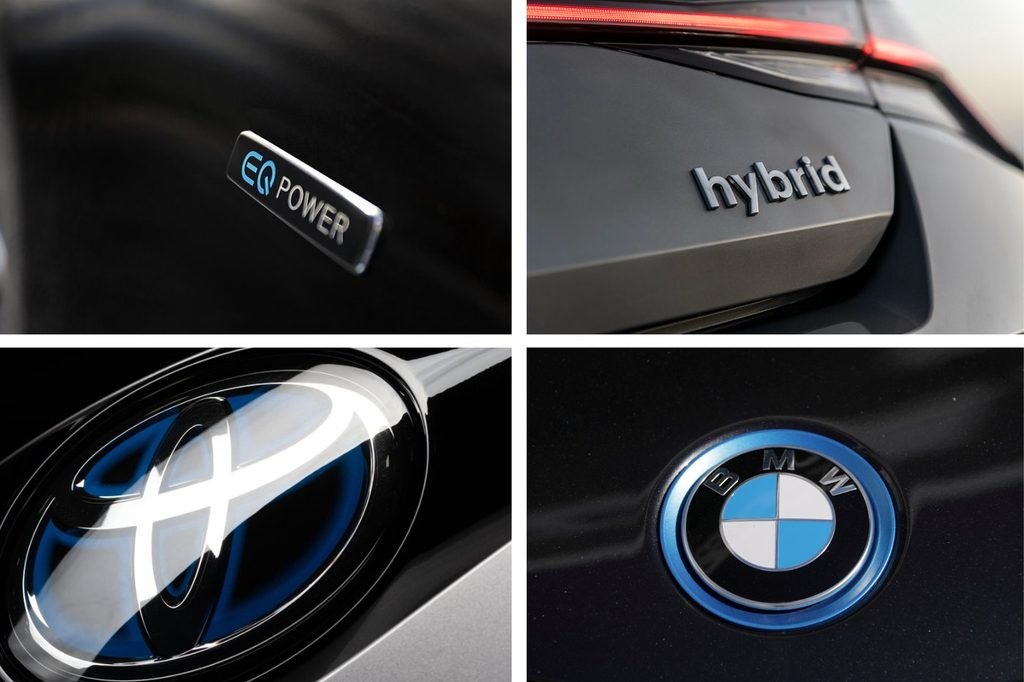
A plug-in hybrid combines a petrol engine, electric motor and a larger rechargeable battery. Unlike a conventional strong hybrid, the battery can be charged externally using a home charger or compatible charging station.
For buyers who want electric driving for shorter trips but still need the flexibility of a petrol engine for long journeys, a PHEV can provide a different approach to electrification.
A Plug-In Hybrid Electric Vehicle, commonly called a PHEV, uses two primary sources of propulsion:
The major difference between a PHEV and a conventional strong hybrid is the battery.
A strong hybrid normally recharges its battery through regenerative braking and the engine. A PHEV has a significantly larger battery that can also be charged by plugging the vehicle into an external power source.
This allows many PHEVs to travel a meaningful distance using electricity alone.
A PHEV can operate in several ways depending on the vehicle and selected driving mode.
The car uses the electric motor and battery without relying on the petrol engine, provided there is sufficient battery charge and the driving conditions allow it.
This can be particularly useful for city driving and short daily commutes.
The petrol engine and electric motor work together.
The vehicle’s control system decides how to distribute power between the two systems depending on factors such as speed, acceleration and battery charge.
When the battery is depleted or more power is required, the petrol engine can provide propulsion.
This gives a PHEV an advantage over a pure EV for drivers who frequently travel long distances.
One of the most common questions is how a PHEV differs from a strong hybrid.
| Feature | Plug-In Hybrid | Strong Hybrid |
|---|---|---|
| Petrol engine | Yes | Yes |
| Electric motor | Yes | Yes |
| Large battery | Yes | No |
| External charging | Yes | No |
| EV-only driving | Generally much greater | Usually limited |
| Petrol backup | Yes | Yes |
| Home charger | Useful/important | Not required |
| Long-distance flexibility | High | High |
| Technology cost | Generally higher | Generally lower |
The key difference is simple: a PHEV can be plugged in, while a conventional strong hybrid cannot.
The PHEV segment in India is currently concentrated largely in the premium and luxury-car market.
Some notable models include the following.
The BMW M5 represents one of the most performance-oriented applications of plug-in hybrid technology.
BMW India currently lists the M5 as a plug-in hybrid model, with the Indian website showing a starting price from approximately ₹2.115 crore, subject to applicable taxes, options and changes by BMW.

The M5 demonstrates that PHEV technology is not limited to fuel-efficient family cars. Electric power can also be used to supplement a high-performance petrol powertrain.
For buyers interested in a combination of performance and electrification, the M5 is an important model in the premium PHEV segment.
The Lamborghini Urus SE brings plug-in hybrid technology into the super-SUV segment.
It combines a 4.0-litre twin-turbo V8 petrol engine with an electric motor and a 25.9 kWh battery.
Lamborghini states that the Urus SE produces 800 CV and can travel for more than 60 km in fully electric mode. The company also quotes a 0–100 km/h acceleration time of 3.4 seconds and a top speed of 312 km/h.
This makes the Urus SE an example of how plug-in hybrid technology can be used not only for efficiency but also for performance and responsiveness.
The Mercedes-AMG S 63 E Performance represents another approach to high-performance plug-in hybrid technology.
Mercedes-AMG’s E PERFORMANCE system combines a conventional combustion engine with electric propulsion and advanced energy-management technology.
Mercedes-Benz India continues to list the S 63 E Performance among its AMG models.
The important point with cars such as the S 63 E Performance is that the electric motor is not simply being used to reduce fuel consumption. It can also provide immediate torque and additional performance.
The BMW XM is another high-performance PHEV available in the luxury segment.
BMW’s specifications list a 4.4-litre V8 petrol engine, electric drive and an all-electric WLTP range of up to 88 km, depending on the version and testing conditions. The specification sheet also lists an AC charging capability of up to 7.4 kW.
The XM illustrates how a large luxury SUV can combine a conventional high-performance powertrain with substantial electric driving capability.
PHEVs offer several potential advantages.
If your daily commute falls within the vehicle’s usable electric range, you may be able to complete many routine journeys primarily using electricity.
This can reduce the amount of petrol used during everyday city driving.
One of the biggest differences between a PHEV and a pure EV is the petrol engine.
If the battery becomes depleted during a long journey, the combustion engine can continue powering the vehicle.
This can be useful when travelling through areas where charging infrastructure is limited.
Electric motors can provide torque very quickly.
Manufacturers therefore use electric motors not only for efficiency but also to improve acceleration and power delivery.
High-performance PHEVs such as the Urus SE demonstrate this approach particularly clearly.
When operating in EV mode, a PHEV can provide the quiet and smooth driving experience associated with an electric vehicle.
For urban traffic, this can make the driving experience more refined.
Plug-in hybrids are not perfect for every buyer.
PHEV technology requires both an electric drivetrain and a conventional combustion powertrain.
That means the vehicle can be more complicated and expensive than a conventional petrol car.
In India, the PHEV market is also heavily concentrated in premium and luxury vehicles.
A PHEV delivers its greatest benefit when the battery is charged regularly.
If you rarely plug the vehicle in, you may carry around a larger battery without taking full advantage of its electric-driving capability.
A home or workplace charging point can therefore make a significant difference.
A PHEV combines two propulsion systems rather than relying on only one.
This can increase the complexity of the vehicle compared with a conventional petrol car or a simpler hybrid.
The larger battery adds weight.
Although electric motors can provide strong performance, the additional battery and hybrid hardware can make PHEVs heavier than equivalent conventional vehicles.
A pure EV runs entirely on electricity.
A PHEV has both an electric system and a petrol engine.
For example:
EV:
Battery → Electric motor → Wheels
PHEV:
Battery → Electric motor → Wheels
and
Petrol engine → Transmission → Wheels
The second system gives PHEVs greater flexibility on long journeys, while an EV has a simpler electric-only drivetrain.
A PHEV can make sense for drivers who: